Monday, April 17, 2017

Latest Blood Pressure Monitor


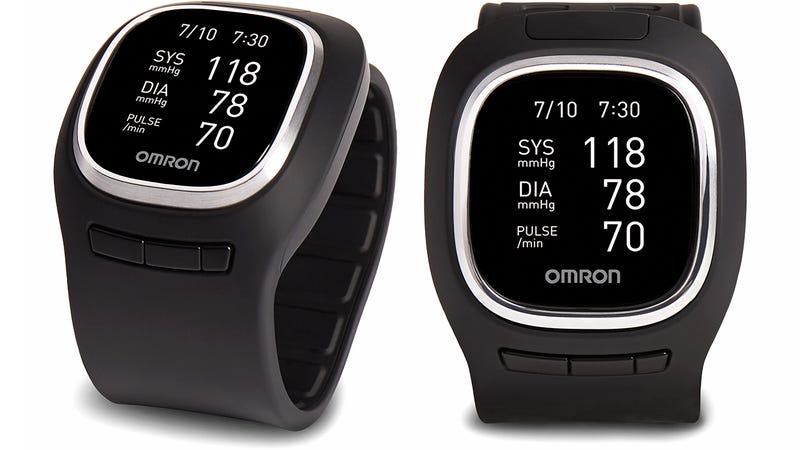
Omron Squeezed an Inflatable Blood Pressure Monitor Into a Watch


Almost every wrist-worn fitness tracker now includes a sensor that can track the wearer’s heart rate as another useful fitness metric. But Omron is the first company with a wearable device that can also monitor blood pressure which provides more useful insights into the wearer’s health.
That’s not to imply that you shouldn’t seek medical attention when your heart rate soars after simply struggling to open a fridge door, but there’s a good reason why hospitals strap the inflatable cuff of a sphygmomanometer to your arm as soon as you’ve been admitted.
Measuring your blood pressure can reveal serious conditions like hypertension or hypotension, but until now the most accurate way to get a reading was using a large inflatable cuff wrapped around a patient’s upper arm. Measuring blood pressure at the wrist is an option, but the Omron Project Zero Wrist Blood Pressure Monitor is the first watch-sized sphygmomanometer that promises readings as accurate as what you’d get from upper arm models.
Pricing and availability for the Project Zero is still undetermined as Omron works to complete certification and FDA-testing on the device, but the company claims it will be accurate enough to be certified for use in hospitals and medical facilities.
Because Omron uses a miniaturized version of the inflatable cuff found on larger blood pressure monitors, the Project Zero isn’t quite as svelte as a wearable like the Apple Watch, but it can still be worn day and night as a fitness tracker if you don’t mind a little extra bulk on your wrist.


In addition to measuring blood pressure, Omron’s over-sized wearable also tracks other fitness metrics like physical activity, or even the quality of your sleep over night. And all of that information can be wirelessly synced with the Omron Connect app, available for iOS or Android devices, allowing users to keep tabs on their health progress over time, or to send health reports to a physician for remote monitoring of a condition.
Most fitness enthusiasts probably don’t need to keep tabs on their blood pressure on a minute-by-minute basis, and there’s little doubt the Project Zero Wrist Blood Pressure Monitor will eventually hit the market at a price point higher than most fitness trackers. But compared to the blood pressure monitors that hospitals have to wheel from room to room and patient to patient, the Project Zero will also certainly be a cheaper and more convenient solution for keeping tabs on a patient’s blood pressure. In other words, there will be no shortage of interested buyers for this one.

Tuesday, February 23, 2016

Noninvasive monitoring of blood pressure using optical Ballistocardiography and Photoplethysmograph approaches.


Abstract

A new all optical method for long term and continuous blood pressure measurement and monitoring without using cuffs is proposed by using Ballistocardiography (BCG) and Photoplethysmograph (PPG). Based on BCG signal and PPG signal, a time delay between these two signals is obtained to calculate both systolic blood pressure and diastolic blood pressure via linear regression analysis. The fabricated noninvasive blood pressure monitoring device consists of a fiber sensor mat to measure BCG signal and a SpO2 sensor to measure PPG signal. A commercial digital oscillometric blood pressure meter is used to obtain reference values and for calibration. It has been found that by comparing with the reference device, our prototype has typical means and standard deviations of 9+/-5.6 mmHg for systolic blood pressure, 1.8+/-1.3 mmHg for diastolic blood pressure and 0.6+/-0.9 bpm for pulse rate, respectively. If the fiber optic SpO2 probe is used, this new all fiber cuffless noninvasive blood pressure monitoring device will truly be a MRI safe blood pressure measurement and monitoring device.
PMID:
 
24110216
 
[PubMed - indexed for MEDLINE]

New Startup Develops Continuous Blood Pressure Measurement Without a Counter-Pressure Cuff


Sense A/S out of Taastrup, Denmark is developing a continuous blood pressure monitor that doesn’t rely on a typical pressure cuff, but rather on a patch that has electrodes that sense the changing impedance of tissue around a vessel and convert it into a BP reading. Measuring other characteristics in electrical signal can also identify vascular stiffness and pulse velocity.
The company just raised € 4.5 million in a third investment round and believes that a 510(k) approval from the FDA is likely sufficient to get the device to market.
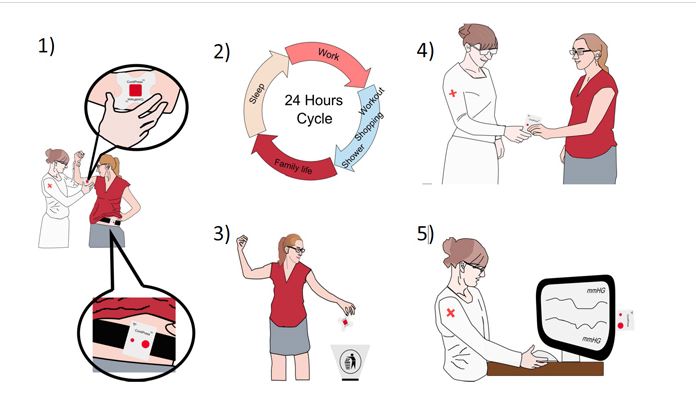
The Danish company Sense A/S develops ContiPress™, which continuously measures the patient’s blood pressure 24 hours a day, down to every 10 second day and night, without the user noticing. ContiPress™ consists of an intelligent patch, which the doctor or nurse places on the patient’s upper arm. From there, the unit monitors the patient’s blood pressure over 24 hours and stores the data for subsequent analysis via an enclosed piece of software. The result is comprehensive data about the patient’s blood pressure over 24 hours and thus an optimal basis for making the correct diagnosis.
Sense has raised € 4.5 million in an investment round with venture fund SEED Capital and Vækstfonden. It is the company third round, since it was founded in 2006 in connection with an investment from SEED Capital. Second round of investment came from SEED Capital and Vækstfonden in 2010. ContiPress™ is currently a prototype that has been clinically tested on people with very large differences in both blood pressure, BMI (body mass index) and age with promising results that verify the measurement principle. The investment round will be used to refine the device and try ContiPress™ in a more extensive clinical testing within the expected commercial launch.

Sunday, February 22, 2015

Dispute between Nordic Partnership and Ms Nita Sah and Mr Sandeep Sha Tarillian

Nordic Partnership was given an exclusive mandate by Tarillian to raise funds based on representations made by the directors who were advised by their lawyers that they would need to provide directors guarantees in respect to all representations made  to date, and Tarillian just at the closing stages of the mandate  have now  terminated this mandate  and disputed that any exclusive mandate was ever given to Nordic to raise any funds.

Nordic Partnership was in the final stages of closing the funding and apologises to all investors who have spent time and money undertaking due diligence based on representations made by Tarillian and or its directors.

Nordic Partnership have ask Tarillian for full disclosure in respect to the companies financial state of health and any other loans the company may have that were not disclosed to Nordic Partnership.


Until this dispute is resolved no further fund raising will  be undertaken. 

If you have any further questions please do not hesitate to contact us on + 44 0207 193 3604 

Wednesday, November 19, 2014

Nordic Partnership - Presentation for project blood for HIgh Net Worth Investors

Nordic Partnership has been given an exclusive mandate to raise funds in order that a UK company can  manufacture a new blood test monitor that  is accurate and simple to use.

Data Room will be open to qualified investors who have signed  the NDA from Thursday 27th November 2014. 


To access data room you need to sign this NDA agreement click here


The current fund raising is due to close shortly when the minimum fund raise of  $2.3m is reached.

If you have any questions please call +44 0207 193 3604


High blood pressure 'costs £2bn'

High blood pressure is costing the NHS billions of pounds every year, a study saysIn the first calculation of its kind, PHE said the annual cost to the NHS in England from diseases caused by high blood pressure is an estimated £2.1 billion.
High blood pressure is costing the NHS billions of pounds every year, a study says

Diseases caused by high blood pressure cost the NHS more than £2 billion every year, new figures have revealed.© by 
Public Health England (PHE) is today launching an unprecedented programme to tackle the condition, which can lead to heart attacks, strokes and chronic kidney disease.
The figures also show that reducing the blood pressure of the country as a whole could save £850 million in spending on health and social care over 10 years.
More than five million people are unaware that they have high blood pressure even though it affects more than one in four adults and accounts for 12% of all visits to GPs in England.
PHE said that if 15% more people who are unaware they have the condition are diagnosed, £120 million could be saved over a decade.
And if another 15% of those currently being treated for high blood pressure controlled it better, a further £120 million could be spared.  
PHE has established the Blood Pressure System Leadership Board, a collection of public bodies, charities and experts.
The group today publishes an action plan setting out steps to improve the prevention, early detection and management of high blood pressure in England in a bid to replicate successes in the area seen in the US and Canada.
Professor Kevin Fenton, national director of health and well-being at Public Health England, said: "Too many people are dying prematurely from preventable conditions and high blood pressure plays a big part in this.
"It is vital for partners to come together to tackle this - from local government, to the health service and charities, we all have a role to play.
Professor Graham MacGregor, chairman of Blood Pressure UK said; "There are over five million people walking around like a ticking time bomb, unaware that they are at risk of having a stroke or a heart attack due to their blood pressure."
Groups across society are being encouraged to take steps to reduce the prevalence of high blood pressure.
Measures set out in the action plan include encouraging families to make changes to their diet and their salt intake in particular, as well as urging those at risk to monitor blood pressure levels regularly and raise any changes with their doctor.
Companies are also being urged to " offer high-quality workplace blood pressure testing to staff".
People from the most deprived areas are 30% more likely to have high blood pressure and the initiative also aims to focus on this group to encourage healthy diets and regular testing.
Professor Huon Gray, national clinical director for Heart Disease for NHS England, said: "Over half of all strokes and many heart attacks could be prevented by ensuring people take steps to get their blood pressure into the normal range, but, unfortunately, high blood pressure often goes unrecognised.
"It's essential that everyone has their blood pressure checked regularly and by taking simple steps like cutting some salt from the diet, or taking more exercise, high blood pressure can be reduced. Left untreated, high blood pressure can lead to disability, or even death."
Public Health Minister Jane Ellison said: "Any new initiative which will improve people's health and well-being as well as saving the NHS money is to be applauded.
"Our goal is to prevent people from developing high blood pressure in the first place - by helping people to eat better, lose weight, exercise more and reduce stress."
Dr Janet Atherton, president of the Association of Directors of Public Health, said: "Population prevention measures - such as reducing salt in the diet and tackling obesogenic environments - alongside better early detection and treatment, will mean that rapid improvements in the public's health can be achieved, together with significant savings to a hard-pressed health and social care system."
PHE has also launched a new blood pressure quiz allowing people to test their knowledge of the issue.

Sunday, November 2, 2014

Latest blood pressure research


A patient having her blood pressure measuredStudying the brain could help us to better understand, and control, high blood pressure. June Davison talks exclusively to Professor Julian Paton about his BHF-funded research.
For every three people who read this article, one of them will have high blood pressure (hypertension). While there's an armoury of drugs available to treat hypertension, nearly half of those who are prescribed medication for it still suffer from the condition. People with hypertension are at a higher risk of heart attack, strokeand kidney disease.
A team led by Professor Julian Paton and his co-principal investigator Professor Sergey Kasparov is researching possible causes of hypertension. The Bristol-based team hopes that its research will inform the development of future treatments to help those who don’t respond to current
medication.
There is huge justification for why we need to do more research into high blood pressure and find better ways of treating it
“Some of the patients in our clinic are on as many as six or more tablets a day, and still have dangerously high blood pressure,” says Professor Paton. “So, there is huge justification for why we need to do more research into high blood pressure and find better ways of treating it.”
Brain power
The focus of Professor Paton’s research is on the relationship between high blood pressure and the brain, specifically the areas called the hypothalamus and the brainstem. These older parts of the brain house different groups of neurons (nerve cells) that transmit messages via the autonomic nervous system, which controls blood pressure. “We don’t control them consciously; they’re controlled automatically,” explains the professor.
Most blood vessels throughout your body are ‘innervated’ or touched by these autonomic or sympathetic nerve cells. The activity of sympathetic nerve cells causes vessels to constrict, which generates our blood pressure. Blood pressure is necessary for blood to flow around the body, making sure your organs receive oxygen and nutrients. Some sympathetic nerve cells travel to cardiovascular ‘target organs’ such as your heart and kidneys. “These are important organs that also help to control blood pressure,” he says.
In stressful situations, our bodies can go into a state of what the professor calls ‘fight or flight’. This is when the sympathetic nervous system becomes hyperactive, causing our blood pressure to rise briefly.
This is completely normal as it’s our body’s way of priming us to either fight or flee from danger;
higher blood pressure means more blood flow, which in turn supplies the additional oxygen and nutrients our muscles need.
Critically, Professor Paton’s team believes that, as well as signals travelling from the brain to the blood vessels, most organs can send information back to the brain.
“For example, if you have a narrowing of the renal artery (the artery that supplies blood to the kidney) and the kidney isn’t getting enough blood, the kidney starts ‘screaming’ signals at the brain to increase blood pressure. As a consequence, this increases blood flow to the kidney, but you become hypertensive,” he explains. “And we believe that the brain responds in a similar way.”

The researcher: Julian Paton

The researcher: Julian Paton
Julian Paton is Professorial Research Fellow in Physiology at the University of Bristol.
Professor Paton describes himself as “half neuroscientist, half cardiovascular scientist”. For many years, he’s been involved in looking at how the brain controls blood pressure.
“I grew up on a farm and was always intrigued with farm machinery and how it worked,” he says. “Out of that curiosity came an interest in physiology, which is basically body mechanics. It’s about understanding how the body functions, and why it stops working properly. I find the mechanisms involved in the maintenance of blood pressure fascinating, and we know less about the brain than any other organ, so it’s a challenge. But, then, I am always up for a tough challenge.”
Professor Paton has been funded by the BHF since his PhD was awarded in 1987, for which he is most grateful.
 
Selfish brain syndrome
The BHF has awarded a £980,415 research grant to Professor Paton, which will further his research into what he describes as the “selfish brain hypothesis of hypertension”.
Essentially, this new theory says that when the blood flow to the brain is reduced, the brain activates the sympathetic nervous system to send out messages to constrict blood vessels around the body. This increases blood pressure, which provides the brain with more blood. While we need some constriction to maintain a healthy blood pressure, it’s the over-activity of the brain (the most selfish organ) that causes too much constriction, which results in raised blood pressure.
“We already know that when someone has high blood pressure, the nerve fibres that innervate the blood vessels are much more active,” explains the professor.
We want to see if we can reverse the issue of poor blood flow into the brain in the hope that this will cause a reduction in the blood pressure
In many patients with hypertension, the vessels at the base of the brain are narrowed and have high resistance (or a low blood flow). Professor Paton’s team is interested in what causes this high resistance because, if they can figure that out, theoretically they could reduce the restriction. This means the brain would no longer feel the need to send out an SOS for additional blood flow, and there would be no increase in blood pressure.
“We want to understand more about why these vessels constrict, become stiff and why their walls thicken. All these things contribute to the resistance and starve the brain of blood,” says the professor. “We want to see if we can reverse the issue of poor blood flow into the brain in the hope that this will cause a reduction in the blood pressure.”
The chicken or the egg?
Key to Professor Paton’s research is to find out which comes first: is reduced blood flow to the brain a consequence of hypertension or is it a decrease in brain blood flow that triggers the hypertension?
He firmly believes it is the latter but, as he says, “We’re putting the dogma on its head, which is pretty provocative.
“Our first step is to confirm that if resistance to brain blood flow is increased, it definitely causes hypertension. We then need to work out what the triggers are within the brain that relay the ‘poor brain blood flow’ signal into increased sympathetic activity and high blood pressure. Once we’ve done this, we can start looking at targeting those triggers, which will hopefully result in a reduction of blood pressure.”
Mapping the mind
The team is using the latest cutting-edge techniques, including radio-telemetry (a means of recording blood pressure remotely and continuously) and fMRI (functional magnetic resonance imaging), to visualise the brain and its blood vessels, while at the same time record changes in blood flow. Professor Paton’s team is also working to identify and manipulate the genes that control brain blood flow.
The professor is optimistic about what the future holds. “We hope to see some initial results within 18 months and, if we make some exciting discoveries, we could think about testing patients with new medications or stenting vertebral arteries hopefully within the next five to seven years,” he says.